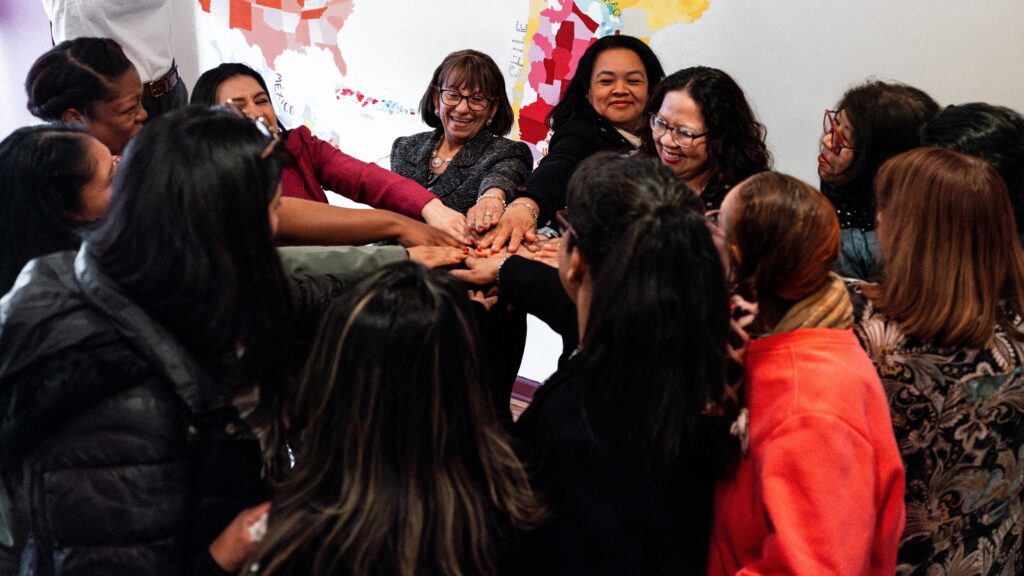

Community health workers have long connected marginalized populations to health systems. This report presents a comprehensive analysis of the challenges and opportunities encountered by CHWs who serve Baltimore City’s Latine population.
Originating in Latin America in the 1950s and gaining formal U.S. recognition in the 1960s, community health workers, or promotores de salud in Spanish, have long connected marginalized populations to health systems. CHWs now play vital roles in both public health and clinical care. Their cultural knowledge and linguistic skills enable them to build trust, improve chronic disease management, and reduce costly emergency care. States like California and New York have led the way in sustaining CHW programs through certification and stable funding models.
Authored by a multidisciplinary team of clinicians, public health practitioners, lawyers, and advocates, this report is based on a literature review, key informant interviews, and a participatory photovoice project with local CHWs. It presents a comprehensive analysis of the challenges and opportunities encountered by CHWs who serve Baltimore City’s Latine population and finds that CHWS are indispensable to advancing health equity in Baltimore.
Fully leveraging the impact of Baltimore’s CHWs requires investment in sustainable workforce development and financing mechanisms. This report offers recommendations for policymakers, healthcare leaders, and community health advocates to strengthen and sustain the CHW workforce as a cornerstone of equitable, community-driven healthcare.